
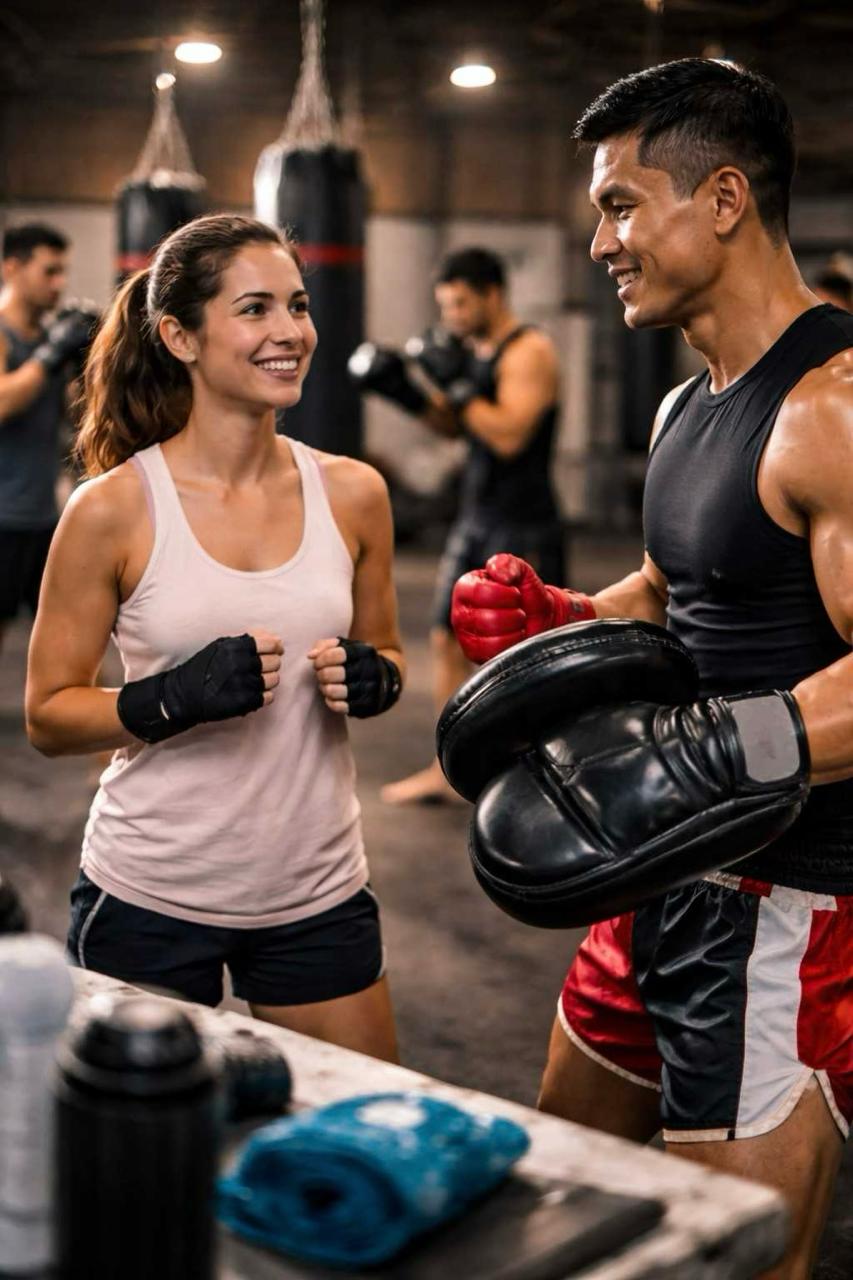
For your first Muay Thai class, bring comfortable workout clothes, a water bottle, a positive attitude, and a willingness to learn. Most beginners can start without specialized equipment, although gloves, hand wraps, and shin guards may be recommended as training progresses.
Starting your first Muay Thai class is exciting, but it’s also normal to feel a little nervous.
One of the most common questions beginners ask is simple:
“What should I bring to my first class?”
The good news is that getting started is much easier than many people think.
You do not need years of experience, expensive equipment, or elite fitness levels to begin training. Most successful Muay Thai practitioners started exactly where you are today.
This guide explains everything you need to know before attending your first Muay Thai class, including what to wear, what equipment you need, how to prepare mentally, and what to expect when you arrive.
Why Preparation Matters
Walking into a martial arts gym for the first time can feel intimidating.
Proper preparation helps you:
- Feel more confident
- Reduce anxiety
- Focus on learning
- Enjoy your first class
The goal is to arrive ready to learn and have fun.
What to Wear to Your First Muay Thai Class
Comfort is important.
Most beginners should wear:
- Athletic T-shirt
- Moisture-wicking workout shirt
- Athletic shorts
- Lightweight training clothes
Avoid restrictive clothing that limits movement. Muay Thai involves kicking, squatting, pivoting, and dynamic movement. Comfortable clothing allows full mobility.
Shoes or Barefoot?
Most Muay Thai gyms train barefoot. This helps students:
- Improve balance
- Develop foot strength
- Maintain proper movement mechanics
Check with your gym beforehand, but barefoot training is standard.
Bring a Water Bottle
Muay Thai classes are physically demanding. Hydration is essential. Bring a reusable water bottle and drink throughout class as needed.
Proper hydration supports:
- Performance
- Recovery
- Safety
Do You Need Boxing Gloves?
Many gyms provide loaner equipment for beginners. However, as training continues, purchasing your own gloves is recommended.
Benefits include:
- Better hygiene
- Improved fit
- Consistent protection
Coaches can recommend beginner-friendly options.
Hand Wraps Explained
Hand wraps help protect:
- Knuckles
- Wrists
- Hands
Many experienced practitioners consider wraps essential. If you plan to continue training, purchasing wraps early is a good investment.
When Will You Need Shin Guards?
Shin guards are commonly used during:
- Partner drills
- Controlled sparring
- Technical training
Most beginners do not need them immediately, but they become important as training progresses.
Do You Need a Mouthguard?
For introductory classes, a mouthguard is usually not required. However, once sparring begins, mouthguards are highly recommended for safety.
Bring a Positive Mindset
The most important thing you can bring is not equipment. It is your attitude.
New students often worry about:
- Looking inexperienced
- Making mistakes
- Keeping up with others
Remember that every advanced student was once a beginner. The goal is progress, not perfection.
Arrive Early
Arriving 10 to 15 minutes early allows time to:
- Meet instructors
- Complete paperwork
- Tour the facility
- Ask questions
Starting relaxed helps create a better experience.
What to Expect During Your First Class
Most beginner classes include:
Warm-Up
Activities may include:
- Jump rope
- Dynamic stretching
- Mobility drills
Technique Training
Students learn fundamental techniques such as:
- Jab
- Cross
- Front kick
- Round kick
Pad Work
Students practice combinations on pads while developing timing and coordination.
Conditioning
Many classes finish with:
- Core exercises
- Bodyweight training
- Conditioning circuits
Common Mistakes Beginners Make
Avoid:
- Trying to go too hard
- Comparing yourself to experienced students
- Overthinking every movement
Focus on learning and consistency.
Fitness Expectations
Many beginners worry about fitness. The truth is: You do not get fit before Muay Thai. You get fit through Muay Thai. Classes are designed to help students improve gradually.
Mental Preparation for Your First Class
Success begins with realistic expectations. Remember:
- You will not master techniques immediately
- Learning takes time
- Mistakes are part of progress
Every class builds confidence and competence.
Benefits of Starting Muay Thai
Students often experience:
- Better fitness
- Increased confidence
- Stress relief
- Improved discipline
- Self-defense skills
The journey becomes rewarding both physically and mentally.
Why Train at Sibai Muay Thai
At Sibai Muay Thai, beginners receive:
- Structured instruction
- Supportive coaching
- Safe environment
- Progressive skill development
Our goal is helping students succeed from day one.
Internal Linking Recommendations
- Beginner Muay Thai Classes
- Adult Muay Thai Program
- Kids Muay Thai Classes
- Personal Training
- Membership Options
Authority Sources
- USA Muaythai
- International Federation of Muaythai Associations (IFMA)
- American Council on Exercise
FAQ Section
Do I need equipment for my first Muay Thai class?
Most beginners can start with basic workout clothing and a water bottle.
What should I wear?
Comfortable athletic clothing that allows full movement.
Are beginners expected to spar?
Most beginner programs focus on fundamentals before introducing sparring.
Can I start Muay Thai if I am out of shape?
Absolutely. Many students begin training specifically to improve fitness.
How early should I arrive?
Arriving 10 to 15 minutes before class is recommended.
Conclusion
Preparing for your first Muay Thai class is simple. Bring comfortable clothing, water, an open mind, and a willingness to learn. The most important step is showing up. Once you begin training, you’ll quickly discover why Muay Thai is one of the most rewarding martial arts in the world.
Call to Action
Ready to begin your Muay Thai journey? Contact Sibai Muay Thai today to schedule your first class and experience the fitness, confidence, and personal growth that come from training in a supportive environment.
